Transform Rail Safety with the ProGuard Framework
ProGuard Safety Culture Framework
At ProGuard Rail, we help rail organisations move beyond traditional Behavioural Based Safety programmes and develop a stronger, more measurable, and more sustainable safety culture.
Our approach is built around the ProGuard Safety Culture Framework — a structured model that helps organisations understand how leadership, behavioural norms, operational pressure, assurance systems, and workforce engagement combine to shape safety performance in the real world.
Rather than focusing only on individual unsafe acts, we examine the wider conditions that influence behaviour, decision-making, and standards on site. This enables clients to move from reactive safety management to a more proactive, intelligence-led culture improvement strategy.
Whether you are a principal contractor, specialist subcontractor, rail infrastructure provider, or project delivery organisation, ProGuard Rail provides the tools, diagnostics, and implementation support to help you strengthen culture, reduce exposure to risk, and improve operational resilience.
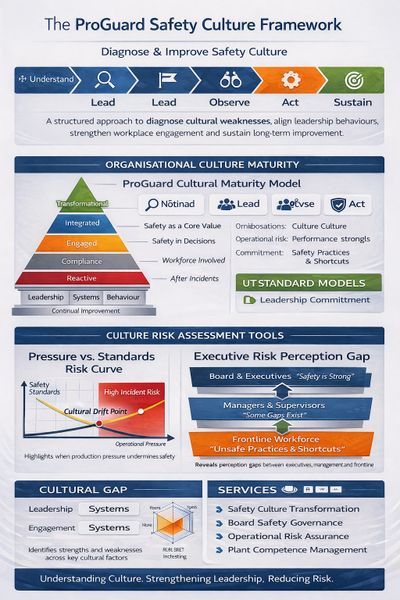
The ProGuard Safety Culture Framework
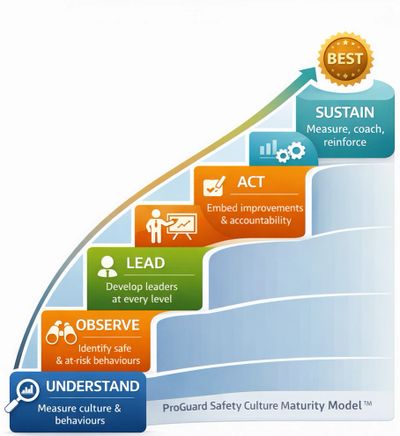
Our framework is built around five practical stages:
Understand
We establish a clear picture of your current culture, leadership signals, behavioural patterns, operational pressures, and areas of exposure.
Lead
We develop leadership capability so directors, project leaders, managers, and supervisors visibly influence standards, accountability, and trust.
Observe
We implement meaningful behavioural observation, engagement, and feedback processes that identify real conditions rather than simply recording acts.
Act
We turn insight into targeted improvement actions, aligned to your projects, assurance systems, and priority risk areas.
Sustain
We help embed lasting change through governance, measurement, coaching, communication, and continuous review.
This creates a joined-up model for culture improvement that connects executive intent with frontline reality.
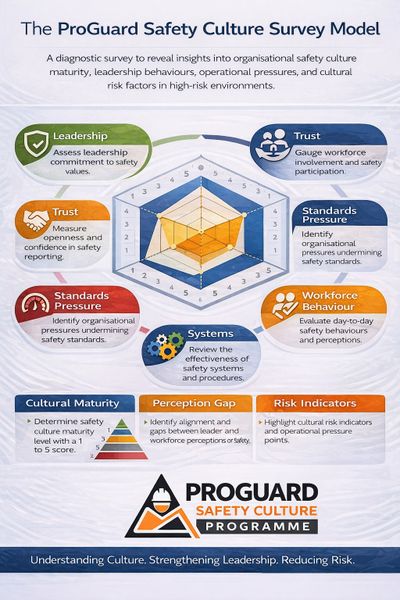
ProGuard Safety Culture Diagnostic
A major part of our service is the ProGuard Safety Culture Diagnostic.
This diagnostic provides a structured baseline assessment of your organisation’s current safety culture. It is designed to identify strengths, weaknesses, cultural blind spots, and the practical barriers that may be affecting safe delivery.
The diagnostic can include:
- leadership and management interviews
- workforce engagement surveys
- behavioural and site observations
- review of assurance and reporting systems
- analysis of pressure points, standards, and organisational drift
- identification of cultural themes across projects or business units
The purpose is to give clients a clear, evidence-based starting point rather than relying on assumptions or anecdotal feedback..
Cultural Safety Maturity Model
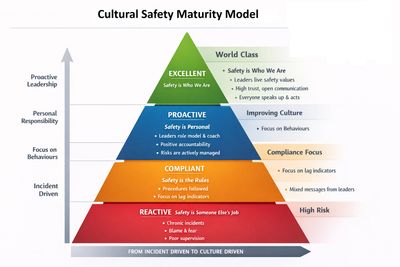
We also assess organisations against the ProGuard Cultural Safety Maturity Model.
This model helps businesses understand where they currently sit on the culture journey and what is required to move forward. It is particularly useful for businesses that want a structured roadmap rather than isolated initiatives.
The maturity model can be used to evaluate progress across areas such as:
- leadership visibility and credibility
- workforce trust and engagement
- supervisory consistency
- behavioural observation quality
- accountability and follow-through
- reporting culture and learning
- management of pressure and competing priorities
- integration of culture into operational delivery
This gives senior leaders a practical way to measure culture, prioritise action, and track improvement over time.
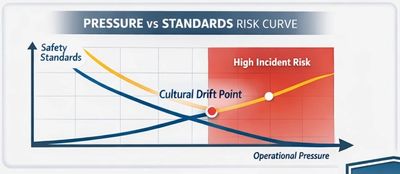
Pressure vs Standards Risk Curve
Pressure vs Standards Risk Curve Model.
One of the most important parts of our methodology is the Pressure vs Standards Risk Curve Model.
This model helps organisations understand how risk increases when operational pressure rises and standards begin to drift. In many rail environments, incidents do not occur because standards are unknown. They occur because programme pressure, commercial pressure, access constraints, fatigue, resource shortages, or leadership signals gradually push people away from the required standard.
Our Pressure vs Standards model helps organisations:
- identify where pressure is undermining safe decision-making
- recognise early signs of standards drift
- understand how shortcuts become normalised
- strengthen supervision and escalation
- create leadership interventions before failures occur
This is especially valuable on complex rail projects where work is delivered under time, access, and production constraints.
Executive Safety Culture Briefings

Sustainable culture change starts at the top.
ProGuard Rail delivers Executive Safety Culture Briefings for directors, boards, senior managers, and project leadership teams. These sessions are designed to help leaders understand the commercial, operational, and moral importance of culture and their direct role in shaping it.
Our executive briefings typically cover:
- what safety culture really is and is not
- why incidents still occur in organisations with systems and procedures
- how leadership behaviour influences standards
- how pressure affects behaviour and decision-making
- what good governance looks like in practice
- how to measure culture beyond lagging indicators
- how to lead visible and credible culture improvement
These briefings are particularly effective for organisations looking to strengthen leadership alignment before launching a wider culture programme.
Executive Briefing Request
Plan your next group outing with ProGuard Rail Railroad. We offer special packages for schools, clubs, and other organizations.
Behavioural Science in Practice
Our work is grounded in practical behavioural science, not theory for theory’s sake.
We use recognised behaviour principles to help organisations understand the relationship between environment, triggers, choices, reinforcement, habits, and group norms. This enables us to design interventions that improve engagement and safe behaviour in a realistic, operationally relevant way.
This may include:
- behavioural observation systems
- feedback and coaching methods
- leadership communication models
- reinforcement of positive standards
- identification of behavioural precursors to incidents
- workforce engagement techniques that improve ownership
The goal is not blame. The goal is to create conditions in which safe behaviour is easier, stronger, and more consistent.
What ProGuard Rail Can Deliver
Our safety culture services can be tailored to your organisation and may include:
- Safety Culture Diagnostics
- Cultural Safety Maturity Assessments
- Executive Safety Culture Briefings
- Behavioural Based Safety programme design
- Leadership workshops and felt leadership development
- Supervisor coaching and front-line engagement support
- Behavioural observation systems and reporting tools
- Pressure and standards risk reviews
- Culture improvement roadmaps
- Ongoing implementation, review, and assurance support
We provide support that is practical, rail-focused, and capable of integrating into your existing management systems and project delivery arrangements.
Who We Support
Our services are suitable for:
- principal contractors
- rail subcontractors
- civils and infrastructure delivery organisations
- specialist engineering providers
- project leadership teams
- operational and maintenance environments
- organisations preparing for growth, assurance improvement, or higher-risk delivery
Whether you are building a culture programme from the ground up or strengthening an existing one, we can help you develop a more mature and resilient approach.
Ready to Strengthen Safety Culture Across Your Rail Operations?
If your organisation wants to move beyond compliance and build a more proactive, measurable, and resilient safety culture, ProGuard Rail can help.
Speak to us about:
- a ProGuard Safety Culture Diagnostic
- an Executive Safety Culture Briefing
- a Cultural Safety Maturity Assessment
- a tailored rail safety culture improvement programme
Contact ProGuard Rail today to discuss your organisation, timescales, and priorities.
Email: info@proguardconsulting.co.uk
Telephone: 07595 893659